- International Test Cricket (Men’s):
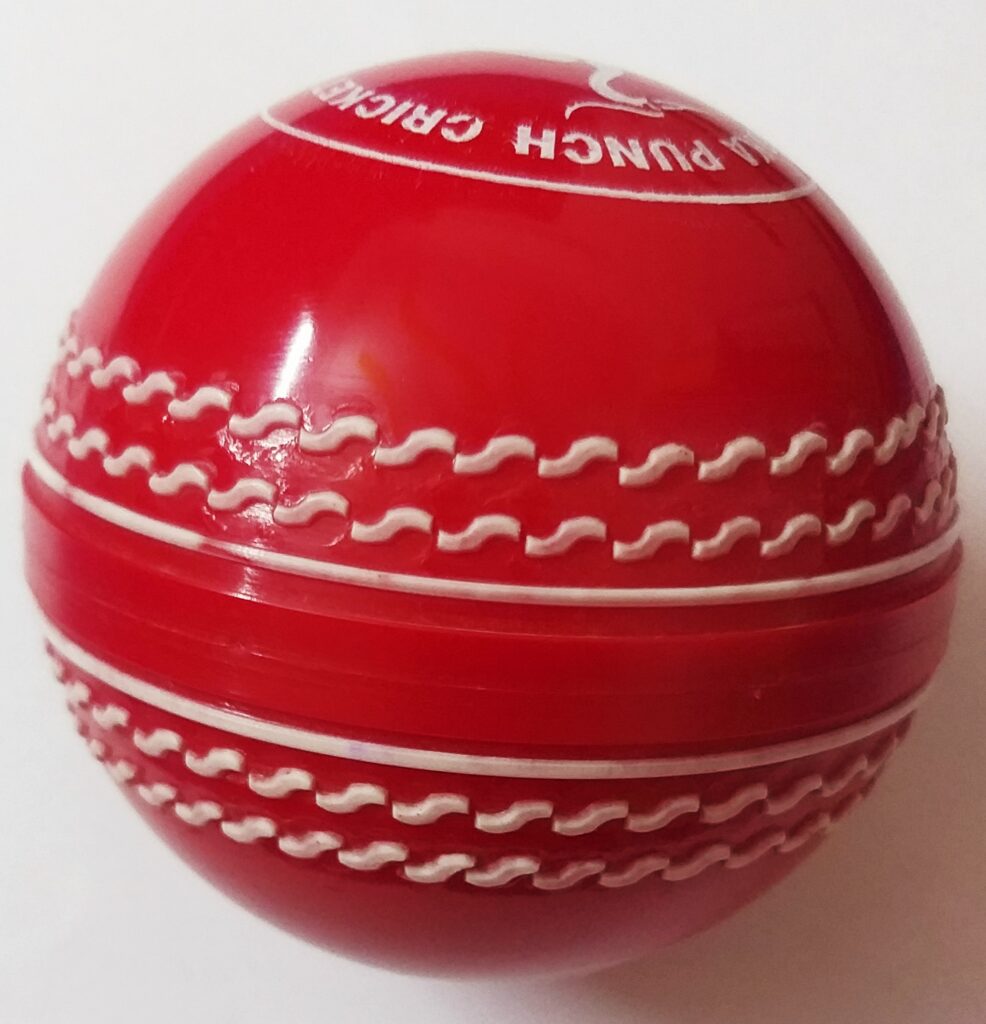
- Weight: The weight of the cricket ball used in Test matches for men is between 155.9 grams (5 ½ ounces) and 163 grams (5 ¾ ounces). This weight range ensures that the ball has enough mass to maintain its integrity and provide a consistent bounce throughout a Test match.
- Circumference: The circumference of the ball should measure between 22.4cm and 22.9cm. The circumference is measured around the widest part of the ball. This range ensures that the ball is of the appropriate size to be comfortably gripped and bowled by the players.
- Women’s Cricket:
- Weight: The weight of the cricket ball used in women’s matches falls between 4 15/16 ounces and 5 1/16 ounces, which is approximately 140 to 144 grams. The slightly lighter weight compared to men’s cricket balls takes into consideration the physiological differences between male and female players.
- Circumference: The circumference of the ball should measure between 21cm and 22.5cm. This circumference range ensures that the ball is proportionate to the size and grip strength of female players.
- Junior Cricket (Under 13):
- Weight: In youth cricket, the weight of the cricket ball is typically between 4 11/16 ounces and 5 1/16 ounces, which is approximately 132 to 144 grams. The lighter weight is used to suit the physical capabilities of young players and facilitate their skill development.
- Circumference: The circumference of the ball should measure between 20.5cm and 22.5cm. This smaller circumference is more suitable for the hand size and grip strength of junior players.
These weight and circumference specifications are established to maintain consistency and fairness in the game while considering the physical abilities and development of players in different categories. Adhering to these specifications ensures that players can handle and manipulate the ball effectively while maintaining the traditional characteristics and challenges of the sport.